
 A number of emails have been sent to district Rotarians recently, allegedly from a variety of district officials.
They appear to and, in some cases actually do, come from their actual email accounts. (You may notice some oddities like misspelled words in the subject line: Greatings vs. Greetings, garbled English, etc.)
If you receive a message like "Are you available at the moment? Please let me know! I have got a request for you to manage discreetly! Thanks" or "Please email me when you get this, I need assistance.”
BE SKEPTICAL!!!
If you reply to one of these, you will likely get a message describing a typical phishing scam: "My niece/grandson is stranded and needs money" or "My phone broke. I need you to purchase a gift card for me and I will reimburse you.”
Stay one step ahead.
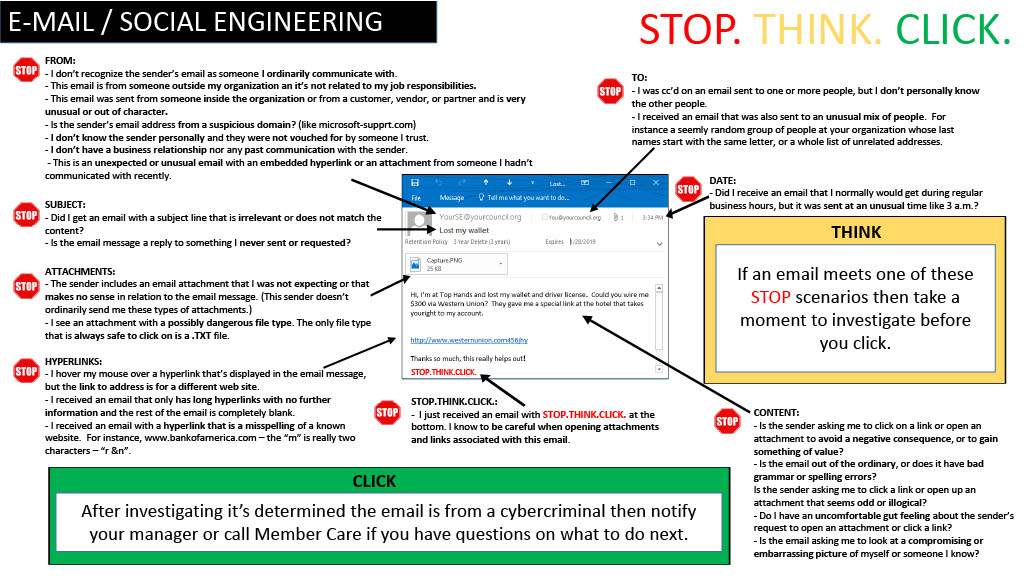
Practice the “STOP – THINK - CLICK” method every time you check your inbox:
- STOP– Pause before reacting. Is the email unexpected? Urgent? Asking for $ or too good to be true? These are all signs that the email you received is a phishing email from a cybercriminal.
- THINK– Examine the sender- is it their correct email? Examine the language, links, and attachments. Look for inconsistencies or subtle red flags.
- CLICK– Only proceed if you're 100% confident it's safe.
You should contact the alleged sender directly, making sure to use their verified email address or by phone, to let them know their account may have been hacked. (They may want to update their password.)
REPORT IT to the D7090 Secretary johnteibert@gmail.com and D7090 PI Chair brandon.blatz@scouting.org.
See the E-Mail/Social Engineering scam prevention illustration (below) to help spot red flags.
When in doubt, report it.
Rotarians should continue to exercise caution and disregard any suspicious message that offers money, requests money, or asks for your personal information.
Rotarians should avoid opening attachments or following links in suspicious messages and pay close attention to the details of the email address and signature block to verify the sender.
Even a single click can have a wide-reaching impact. By staying alert and applying these three simple steps, we can each play a role in keeping our data—and each other—safe.
Yours in Service,
Brandon Blatz
D7090 Public Image Chair