
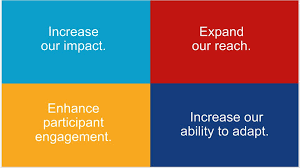
 Our district’s strategic plan is now available on the district website HERE.
District 7090 is made up of many volunteers who give their time to enable the district to achieve its mission. The operational leadership of the district is the District Governor and District Council. District Council meets on a regular basis to deal with two broad areas:
1. the “operational aspect” of the daily, monthly and annual aspects of the functioning of a large, multi-national voluntary organization and,
2. the areas of focus for the current year as outlined in the current Strategic Plan.
Both are essential for the stability and growth of the district. The first maintains a continuum of the ongoing elements; the second captures the “do different” or “do more of” activities that have been identified in the District Survey and Report Card.
The implementation of the Tactics and Goals in the Strategic Plan are monitored during the year with reports to District Council at each meeting. Chairs responsible for specific tactics report on their actions since the previous meeting, the “level” of implementation for each tactic and their actions being put into place prior to the next meeting.
Interested in strategic planning for your club? Contact Robert Morrow (robertmorrow@bell.net)
- Robert Morrow
The District Survey results are the key elements in the development of the Strategic Plan. From feedback from the District Governor leadership group, District Council and other leaders within the district, the tactics and goals are identified for the upcoming year. The responsibility for the implementation of the tactics and goals within the plan (i.e. chairs of committees) is identified for each tactic/goal and reviewed individually with each of the respective individuals to ensure that committee chairs understand their role in the implementation process.
Our Strategic Plan is based on the promotion of CLUB VIBRANCY. The five elements are outlined in the plan on the website.
One of the keys to the success of the Strategic Plan process is an intentional implementation plan. This has been developed as a corollary to the Strategic Plan and is shared with all those who have responsibility for specific tactics and goals.
Central to the success of the implementation is the inclusion of input at specific stages and for identified tactics as part of each of the five District Council meetings. In their reports to District Council, the committee chairs complete their reports which provide council with the level of implementation of their tactics/goals. These reports also allow chairs to identify actions for completion by the next meeting of council and any outside forces which are impacting on the implementation process. This provides excellent feedback which can be utilized for the next year’s plan. At the same time, chairs have the opportunity to ask for assistance from other council member in the implementation process.
Application of Strategic Planning at the club level. This “model” has opportunities to assist willing clubs to develop their own Strategic Plans; it is not a panacea for all clubs and will not be the “saviour” for a club currently at risk. However, with a commitment from the board and from club members, the appointment of a small team to oversee development and commitment, and an unbiased facilitator (from outside the club), clubs may be able to deal more effectively with the changes we are facing currently and over the next few years. District assistance – at whatever level the club wishes – is available to assist with the process at the club level. A new sub-committee – the Vision to Action Committee - attached to the Learning Committee has been established to coordinate these efforts. More information can be obtained from Robert Morrow (robertmorrow@bell.net).